Newsletter Archive

|

Arctic weather? What vortex? According to the Hearth, Patio, and Barbecue Association, 56 percent of Americans claim to grill during the winter. If you’re one of them, you know there’s more to cold-weather grilling than an extra layer of clothing. Grills perform differently, fire and smoke behave differently, and foods take longer to cook. Take it from a guy who put in 20 winters in New England prior to moving his grills to Miami.
So what do you need to know about cold weather grilling? For starters:
- Never pull your grill into the garage, covered patio, or other outbuilding. This not only creates a fire hazard, but noxious fumes (carbon monoxide) can accumulate and kill you.
- Add 20 to 30 percent to the cooking times when temperatures fall below freezing.
READ MORE TIPS →
|
|
|
|
|
|
FROM OUR BBQ COMMUNITY
|
|
|
Anticuchos

Learn what it is and why you need to know!
|

Find out 12 things you need to know about nailing the perfect pulled pork sandwich.
READ MORE →
|
FROM THE STORE
|
|
|
 Planet Barbecue! 309 of the tastiest, most tantalizing recipes from around the world.
|
 UP IN SMOKE
Up Your Indoor Grilling Game—With Your Fireplace
January 21st, 2014
Dear Up in Smoke Subscriber,
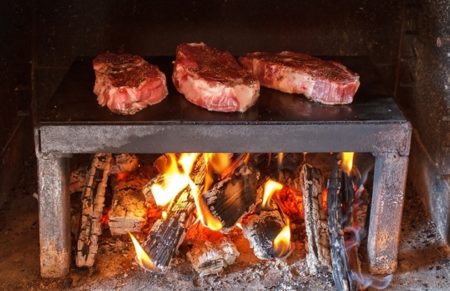
It was a typical day on the barbecue trail: a bone-jarring drive halfway across northern Italy—a small price to pay for what was reputed to be one of the best purveyors of bistecca alla fiorentina (Florentine steak). I was looking forward to real chianina beef (from a slow-maturing breed of Italian cattle prized for its dark, rich-tasting meat) cut four-fingers thick by a grill master named Angelo Leocastre. We arrived at the destination—a converted 17th century hunting lodge—at dusk, but a tour of the property revealed neither grill nor wood smoke. My despair grew until 9 p.m., when Leocastre summoned us not to a grill, but the fireplace.
As the nights turn cool and darkness comes early, many people retire their grills for the winter, but this is precisely the sort of weather an Italian cherishes for grilling. In northern Italy, grilling is often done indoors over an oak fire in the fireplace. Indeed, in Friuli, in northeastern Italy, there’s even a special indoor-raised hearth (picture a stone fireplace on legs) called a focolare.
The fireplace is the oldest indoor grill. The ancient Romans called it a focus (hearth), and its central role in cooking, domestic wellbeing, and promoting general human happiness made it the literal and spiritual focal point of the home. (Remember that the next time your spouse tells you to focus.)
The invention of cook stoves in the 19th century and central heating in the 20th century effectively made the fireplace an aesthetic relic in the U.S. (Think of it—for most of human history, people depending on the hearth for cooking.) In many parts of the world—some examples include Argentina, Italy, France, and India—cooking on an indoor hearth remains a living art.
Forget the massive, tricked-out medieval or colonial hearths you may have seen at historic sights, bristling with trammels, cranes, cauldrons, trivets, etc. (A lot more on those in future blogs.) Little special equipment is required for cooking in a fireplace. But you will need:
- An ample supply of dry, well-seasoned hardwood—oak, hickory, maple, pecan, fruitwoods, etc. (Softwoods like pine or spruce are not recommended as they burn quickly and deposit
flammable, tar-like creosote in your chimney. Also, never substitute charcoal for wood as it gives off deadly carbon monoxide fumes.)
- Tinder such as wood chips or shavings, newspaper, fatwood, etc.
- A shovel or hoe or ash rake for corralling embers.
- Fireplace tongs or a poker for maneuvering logs. Long-handled, spring-loaded tongs for handling the food.
- Heavy fireplace or grilling gloves.
- A Tuscan-style grill grate or firebricks and/or an improvised grate, such as a wire cooling rack or the grate from a toaster oven.
- Fire-resistant cookware, such as a skillet, griddle, Dutch oven, or grill pan, preferably cast iron.
Here are a few of your cooking options:
- “Caveman style” is the term I use for foods that can be cooked directly on or in the embers. These include whole onions, eggplant, bell peppers, yams, potatoes, beets, and even thick steaks like Porterhouse, T-bone, rib-eye, etc.
- Arrange a row of firebricks in front of the fire, and position whole onions, squash, potatoes, yams, etc. on top. Use crumpled aluminum foil rings or our Best of Barbecue Grill Rings—to hold them steady. Roast in front of the fire until darkly browned on the outside and tender inside (test with a bamboo skewer), turning the vegetables with tongs so they roast evenly.
- Arrange two parallel rows of two or more courses of firebrick, broad sides down, toward the front of the fireplace or on the fireplace “apron.” Shovel or hoe a layer of embers between the two rows, then rest a frying pan, griddle, Dutch oven, or even a soaked cedar plank on the bricks. Yes, the wood smoke will curl over the edge of the pan, infusing the food with smoke flavor.
Are you inspired to try this ancient cooking method? For more than 250 recipes that can be adapted to fireplace grilling, check out my book Indoor! Grilling.
Try these two recipes this weekend and post your photos on the Barbecue Board:
Yours in righteous grilling,
Steven Raichlen


 UP IN SMOKE
Join the Fun at Barbecue University™
January 7th, 2014
Dear Up in Smoke Subscriber,
If there’s one thing true about a consumer society, it’s that we Americans have a lot of stuff. Especially after the holidays.
So you won’t be completely surprised that the Journal of Consumer Psychology argues that people derive only temporary satisfaction from material purchases. It’s experiences—not things—that make us the happiest. By this reasoning, we might derive more pleasure by enrolling in a bartending class than by dropping money on a pricy battery-powered margarita blender.
Otherwise stated, and to paraphrase an old saying about fish, if you give a man barbecue, he eats happily for one day. If you teach him how to barbecue, he eats happily for the rest of his life.
If having new experiences is one of your resolutions for 2014, do we have a program for you! Enroll in Barbecue University™, and by this time next year, you’ll be a culinary force of nature. Or as Forbes writer and BBQ U alum Larry Olmsted put it, “… you will likely be the most popular backyard cook in your neck of the woods for years to come.”
Imagine summer camp for adults who love to grill, held at a luxurious Forbes 5-Star, AAA 5-Diamond resort—the Broadmoor in Colorado Springs. The Food Network named us “the best BBQ experience in the U.S.”, and our students come from as far away as Austria, Ireland, Dubai, Australia, and Guam.
Appropriately, the theme “Adventures on Planet Barbecue” anchors this year’s BBQ U menu. Hungry for steak? We’ve got a 4-pound, 4-inch thick (!) Tuscan T-bone grilled the old-fashioned way, over an oak wood fire. Craving ribs? We’ll blast your taste buds with authentic Jamaican jerk baby back ribs straight from Boston Beach. You’ll grill mammoth pork porterhouses on a genuine German spiessbraten (“swinging grill”). Our berber leg of lamb will transport you to Morocco.
Of course, you’ll also master such American classics as Hill Country brisket (served with red-eye barbecue sauce), “brontosaurus” ribs (monster-size beef ribs), cherry-glazed baby backs, Santa Maria tri-tip, and smoke-roasted cinnamon peach crisp for dessert.
As for techniques, you’ll learn:
- The five methods of live fire cooking (can you name them now?)
- How to grill the perfect steak (hint: lose your grill grate)
- How to tell when any meat is cooked
- How to cook fish without it sticking to the grill grate and vegetables without fear
- How to choreograph an entire meal on the grill, from appetizer to dessert
Make no mistake: BBQ U is an information-dense, fast-paced, hands-on experience that will change the way you shop, cook, and eat. (Fast? Each day we’ll prepare 8 to 10 different dishes.) But it has a relaxed vibe, and you’ll have plenty of free time to take advantage of the Broadmoor’s three tournament-quality golf courses, miles of hiking trails, swimming pools, bowling alley, and more than a dozen restaurants, not to mention the many attractions (Pike’s Peak, Garden of the Gods, the Air Force Academy, etc.) of nearby Colorado Springs.
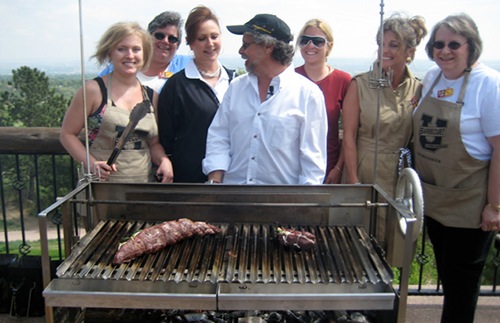
So what’s a typical day like at Barbecue University™? Each morning, you’ll ride the shuttle from your luxurious high-thread-count accommodations to BBQ U’s stunning high-elevation classroom at the Cheyenne Mountain Lodge—as close as you’ll come to barbecue heaven on earth. Our soaring glass and timber amphitheater classroom (where lectures and food prep take place) opens to a vast outdoor burn area where you will do the smoking and grilling on the school’s more than three dozen grills and smokers. Curious about that $17,000 stainless gas supergrill or the biggest Big Green Egg? Thinking of buying a wood-burning grill or oven? Debating the merits of infrared versus charcoal? Test-drive them all here at Barbecue University™, and with many grills, your BBQ U student status will earn you a manufacturer’s discount.
Class always ends with a plate-burying lunch of the day’s recipes. Should your spouse not choose to join you in class (believe it or not, some don’t), there’s a world-class spa and shopping, and you can invite guests to BBQ U lunches for a nominal fee.
Barbecue University™ makes an awesome bonding opportunity for husbands and wives, boyfriends and girlfriends, fathers and sons, mothers and daughters, as well as friends and coworkers, not to mention an unforgettable gift for birthdays, anniversaries, or Valentine’s Day. We’ve seen many friendships forged in the convivial, team-building atmosphere of this class, now in its 15th year, and some alumni are now working on their Ph.Bs (Doctor of Barbecue) and beyond.
If thrilling new experiences are what you seek for 2014, look no further than Barbecue University™. This is one New Year’s resolution that’s easy to keep. The next sessions take place May 28 to May 31 and May 31 to June 3, 2014.
For further details, visit BarbecueBible.com or contact the Broadmoor directly at 855-634-7711.
Extra Credit:
Test your BBQ IQ: the Barbecue University Final Exam. Students and staff alike have a lot of fun at BBQ U, but we take our curriculum very seriously. We even give a final exam. (Don’t worry, no one has failed—yet.) How many of the questions can you answer?
And just to whet your appetite, we’re going to share one of our most popular signature recipes, Chile Verde.
Once you get all this useful barbecue knowledge—and hopefully before that too—join our Barbecue! Bible Wiki to share everything you know about Planet Barbecue.
Yours in righteous grilling,
Steven Raichlen
 UP IN SMOKE
Just in Time for the Holidays: A Prime Rib Primer
December 24th, 2013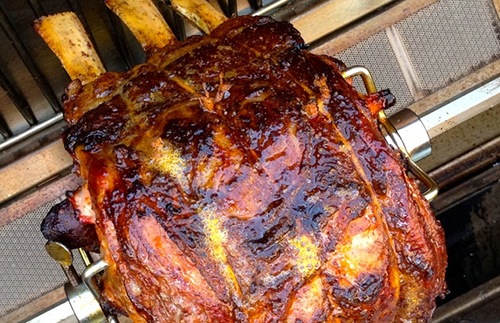
Dear Up in Smoke Subscriber,
Prime rib is one of the most intimidating hunks of meat a grill master will ever face, capable of making—and breaking—reputations. It’s certainly the most expensive: A 10-pound roast serving eight to ten adults could set you back over $200 at your local supermarket, or over $800 if you opt to serve Wagyu beef from a pricy yup-scale online purveyor. (Not including shipping.)
But when it comes to an eye-popping, show-stopping, unrepentantly carnivorous centerpiece for a holiday dinner or New Year’s Eve feast, there is nothing that can beat this magisterial joint of meat.
As long as it’s properly cooked, of course. The most egregious sin you can commit against prime rib is to overcook it. Do that, and it’s game over.
If you plan on investing in a prime rib now or in the future, here’s what you should know before you whip out your checkbook, credit card, or first born:
- A full prime rib—sometimes referred to as a standing rib roast or a rib-eye roast—is comprised of the sixth through the twelfth ribs (seven bones in all). Trimmed, it can weigh up to 14 pounds or more. Like beef tenderloin, this large tapered muscle receives little exercise, making it finely textured and exceedingly tender.
- Confusingly for the consumer, the term “prime rib” predates the USDA meat grading system. Most supermarkets sell “choice” prime rib, with USDA “prime” beef going to restaurants and high-end purveyors.
- If buying bone-in prime rib, figure on feeding two people per bone, or one pound per person. (A 4-bone roast weighs about 8 pounds and will feed eight people. It fits comfortably on most grills.) If buying boneless prime rib, allow 1/2 pound per person—more if you want leftovers, and you definitely want leftovers.
- You’ll pay a premium for organic prime rib or grass-fed beef. For me, the lack of antibiotics and growth hormones are worth the price.
Okay, you splurged. What’s next?
First, a bit of knifemanship. If a rack has not been Frenched by the butcher, you’ll want to do it yourself. Frenching is a fancy term for scraping the exposed part of the bones clean of meat, fat, and cartilage before roasting. Come to think of it, perfectionist that you are, Frenching isn’t optional at all. Here’s how you do it:
- Lay the roast on a cutting board meat side up. Using a sharp knife, cut through the fat cap straight down to the rack of bones, then come in through the side, your knife parallel to the bones, until you intersect your first cut. (For photos, see page 33 of How to Grill.) Remove the resulting fatty wedge.
- Next, cut out the pieces of meat between the ends of the ribs. (Roast these alongside the prime rib so you’ll have drippings for Yorkshire pudding).
- Use a small sharp paring knife to thoroughly scrape the bones clean.
- Finally, trim the remaining fat covering the roast to a thickness of 1/2 inch.
Next, a bit of bondage. Prime rib has naturally occurring lines of fat that divide the “eye” of the muscle from the spinalis dorsi, commonly known as the cap. Tying the roast with butcher’s string between the bones (bone-in roast) or at 1-1/2-inch intervals (boneless roast) will discourage separation along these natural fault lines as the meat cooks. It will not only be easier to carve, but will make a more professional-looking presentation on the plate.
Next, season the prime rib. There are two approaches—studding and rubbing—each produces excellent results. To stud a prime rib, make small slits in the roast with the tip of a paring knife and fill them with slivers of garlic, sprigs of rosemary or other herbs, pieces of anchovy or cheese, etc.
To rub the roast, you make a dry spice blend of salt, pepper, dried rosemary, and oregano, or a wet paste of salt, pepper, garlic, rosemary and olive oil (puree these ingredients in the food processor). Apply these flavorings in a thick layer over the surface of the prime rib. For even more flavor, do both. (Yes, sometimes more is more.)
Finally, if you don’t own an instant-read meat thermometer or remote thermometer (newer models come digital and wireless), invest in one before you start grilling. Trust me, it will pay for itself.
And now the moment of truth. There are three ways to cook a prime rib on the grill:
- You can smoke the roast from start to finish
- Smoke-roast it using a combination of indirect grilling and smoking
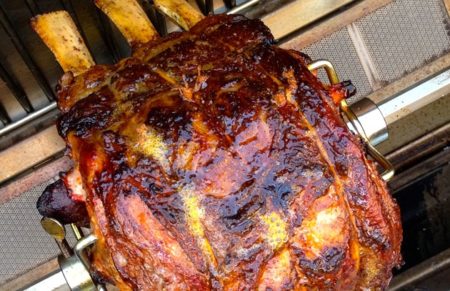
- Or my personal favorite: spit-roast it on a rotisserie.
Decide whether you want your prime rib rare (120 to 125 degrees), medium-rare (130 to 135 degrees), or medium (140 to 145 degrees), remembering the internal temperature will rise 5 to 10 degrees after you’ve removed the meat from the grill.
Finally, let the prime rib rest on a large grooved cutting board, loosely tented with foil, for 15 to 20 minutes. Notice I said loosely tented—really, you just drape a sheet of foil over the prime rib. Do not bunch the foil around the prime rib or you’ll make the crust soggy.
Just before serving, snip the strings. Carve the roast off the bones using a carving knife or electric knife. Run the knife along the curved interior of the ribs. Cut the ribs into individual bones for gnawing. Warning: you’ll have enough meat for eight people, but bones for only four. Figure out ahead of time how you’ll ration them out.
Then cut the meaty part of the roast crosswise against the grain into slices 1/4- to 1/2-inch thick. Serve at once with any juices that accumulate in the well of the cutting board.
Horseradish sauce is the traditional condiment. Get the electrifying Barbecue! Bible version.
Now you can take your bows.
Do you want to share your own knowledge about the barbecue and grilling world? Become a contributor on the Barbecue! Bible Wiki. You can add new entries about grilling techniques, food from around Planet Barbecue, barbecue gear, and more.
If you have a burning question or a live-fire dilemma that you need help with, post it to our new Ask Steven forum. Remember, there are no secrets between grill masters!
Yours in righteous grilling,
Steven Raichlen
 UP IN SMOKE
Rubbing it in: Homemade for the Holidays
December 11th, 2013
Dear Up in Smoke Subscriber,
Still looking for that gift that will leave your favorite griller gobsmacked, but don’t feel like braving the crowds or arctic-like temperatures? I have a solution (or more precisely, powder): a bespoke batch of barbecue rub you whip up in the comfort of your own kitchen.
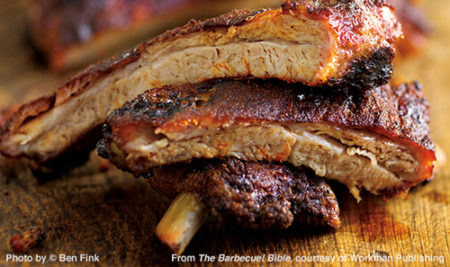
I remember when few folks outside competition barbecue circles used—or had even heard of—dry rubs. Today, it’s hard to imagine barbecuing or grilling without these crust-forming, flavor-boosting, palate-blasting mixtures of herbs and spices. Rubs make good barbecue great and great barbecue the stuff of legends. They’re that powerful.
Fortunately, rubs are super easy to create at home using ingredients you likely have on hand already. They take minutes to mix up, are infinitely customizable, and are always appreciated by the grilling enthusiast(s) on your holiday gift list.
A dry rub—wet rubs are a topic for another day—is a mixture of herbs, spices, and seasonings. There are many examples of traditional spice mixes around the world’s barbecue trail—Morocco’s ras el hanout, for example, or France’s quatre epices or China’s five-spice powder, to name a few.
In America, where pit masters use rubs with greater imagination and with a freer hand than anywhere else on Planet Barbecue, rub preferences—just like barbecue itself—follow predictable regional lines.
- In the South and Midwest, for example, barbecue rubs play a variation on a theme of salt, pepper, paprika, and brown sugar, with onion or garlic powder or celery or mustard seed for aromatic counterpoint.
- Texas brisket masters use a no-nonsense blend of coarse salt and cracked or coarsely ground black pepper (in roughly equal parts), sometimes igniting the mixture with hot pepper flakes.
- As you move west, rubs acquire the south-of-the-border accents of chili powder, cumin, and oregano.
- In my neck of the woods (Miami, Florida), rubs dance to a tropical beat in the form of sazon (a salt, garlic, and oregano rub from Puerto Rico) or a scotch bonnet- and allspice-blasted dry jerk rub from Jamaica.
- Then there are what you might call the “maverick” rubs—rubs flavored with offbeat ingredients you wouldn’t normally associate with barbecue, like cocoa powder, wasabi, or ground coffee.
The most successful rubs for meat, poultry, seafood, and vegetables play to the five flavors that can be detected by human taste receptors—sweet, sour, bitter, salty, and umami—the deep meaty flavor associated with mushrooms, Worcestershire sauce, or MSG.
So what do you need to get started? Little more than a mixing bowl and your fingers or a whisk. And some cool-looking jars or tins to package your homemade spice masterpieces.
Here are six tips for blending the perfect rub every time.
- Replace any out-of-date herbs and spices before starting the project. Pitch any you know to be over 6 months old, including that big jar of paprika you bought during the Clinton administration. Restaurant supply houses, big box stores, and high-turnover markets that cater to an ethnic clientele often have the best deals.
- For superior flavor, toast any whole spices in a dry frying pan over medium-low heat until fragrant. Cool, then grind in a spice grinder or coffee grinder. (I dedicate a separate one to spices so my morning coffee isn’t laced with cumin.) A mortar and pestle also works if you enjoy doing things the old-fashioned way. (And what’s more old-fashioned than homemade gifts?)
- If you’ve never made your own rub before, I recommend following a basic recipe before striking out on your own. You can always put your own spin on it—see my suggestions for personalizing that recipe.
- Strive for interesting texture and color. Use crumbled, dried, small whole or coarsely ground spices and seeds, and vibrantly colored spices like paprika or turmeric to jazz up your rub.
- Even if it goes against your instincts, accurately measure the ingredients and record the recipe. That way, you can replicate your successes. The receiver may expect more of your special rub next year.
- Include instructions for storage (store in a dry place away from heat and light) and use (figure on 2 to 4 teaspoons of rub per pound of meat, fish, or poultry). For an extra generous touch: share one of your favorite barbecue recipes featuring this rub.
Have a killer rub recipe? Or did you come up with one after reading this newsletter? Post your photos and recipes on the Barbecue Board. Seriously, folks. Make our mouths water!
And if you’re really pressed for time as the holidays approach, take a shortcut by giving that special barbecuer in your life one of my Best of Barbecue rubs. I’ve done all the work for you. Enjoy!
Yours in righteous grilling,
Steven Raichlen
 UP IN SMOKE
Our Annual Dream Barbecue Holiday Gift Guide
November 26th, 2013
Dear Up in Smoke Subscriber,
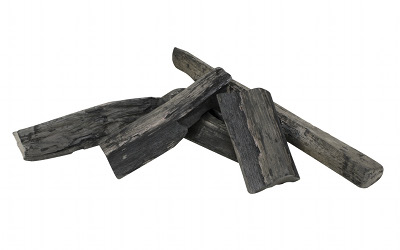
For most people, coals are not what you want to find in your holiday stocking. Unless you belong to the grill-obsessed Barbecue! Bible community, and the coals in question are pieces of costly bincho-tan charcoal from Japan. Which brings us to gift shopping for that special barbecuer or griller in your circle. Don’t worry. We smoke and fire fanatics are an easy crowd to shop for, and we derive almost as much pleasure from giving as receiving. (Notice I said “almost”.)
Here to give you guidance is the Barbecue! Bible Dream Barbecue Holiday Gift Guide. We have 11 items listed in this newsletter and more in the 2013 Barbecuers’ Holiday Gift Guide on BarbecueBible.com. Use these lists to help you shop. Or print them out and leave them where friends or family members will find them before they go shopping for you. Call any one of these items the gift that keeps on giving, because once the recipient fires up the grill, you’ll benefit from your largesse. All of us at Barbecue! Bible wish all of you Happy Holidays and a healthy, smoke-scented New Year.
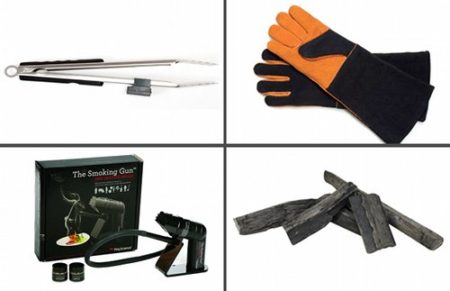
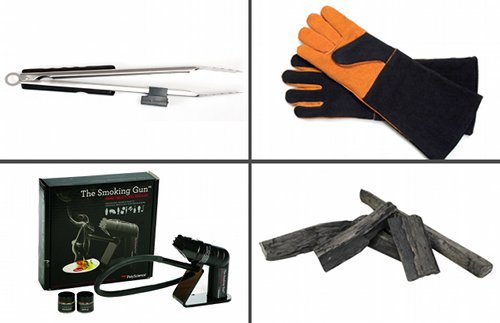
The Smoking Gun: Do not be deceived by appearances. This resembles a tricked-out blow dryer with a rubber hose attached—not normally a good look in barbecue circles. But The Smoking Gun is no toy: In 30 seconds, it will infuse meat, seafood, poultry, cheese, vegetables, and even cocktails (like a classic Manhattan) with fragrant wood smoke. It has a good pedigree, too. It’s the least expensive product of PolyScience, a U.S. company that builds industrial temperature control devices. Way too fun. $99.95.

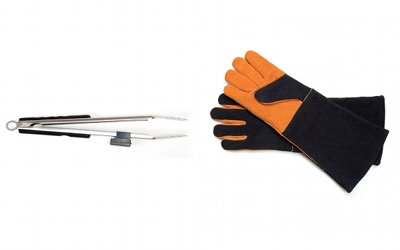
Best of Barbecue Lumatong and Suede Grilling Gloves: The darkest days of the year fall in December, but that’s no excuse not to see what you’re doing on the grill. Let there be light in the form of the perennially popular Lumatong, a sturdy, multi-tasking set of locking tongs with a halogen-bulb flashlight mounted on one side. (Yes, the light detaches, making the tongs dishwasher safe.) An illuminating idea. $17.09. And for an even more generous gift, pair it with our Best of Barbecue Suede Grilling Gloves—ranked by Cook’s Illustrated magazine as the top protection for handling hot chimney starters and grills. $18.99.
Primal Grill DVD: Seasons 1 – 3: Want more of Primal Grill even when your local PBS station is airing its winter programming, not grilling shows? Check out our Primal Grill greatest hits DVD, featuring 16 hours of some of the best grilling from Steven’s popular PBS show. Three seasons, 150-plus recipes, and countless tips and techniques for grillers and barbecuers of all skill levels. And for amusement, some caught-’em-on-camera bloopers. Every episode educates and inspires. $69.99.

Charcoal Companion Nonstick Herb Grilling Grid: Sandwich fresh herbs, whole spices, or wood chips in this ingenious hinged grilling grid prior to placing it and the food on the grill. Imagine salmon fillets perfumed with fresh dill or fennel fronds, for example, or turkey breast blasted with flame-seared sage, rosemary, and marjoram. $12.99.

Smokenator 1000: Turn your Weber kettle grill into a water smoker, thanks to the simple but ingenious Smokenator 1000. Invented by the late barbecue enthusiast Don Thompson, the Smokenator 1000 consists of an 18-gauge stainless steel baffle that fits securely into one side of a kettle grill. It corrals approximately 60 charcoal briquettes (enough for six hours of low and slow cooking) and accommodates a water pan (included) to keep the kettle environment and the food moist. The Smokenator is accompanied by thorough instructions for maintaining temperatures between 180 and 240 degrees. $59.95.

Barbecue University: The ultimate gift for anyone who loves to cook barbecue, eat barbecue, or wants to take his/her grilling and smoking skills to the next level. This intense hands-on 3-day class, taught by yours truly and hosted by the luxurious Forbes 5-Star Broadmoor resort in Colorado, attracts people from all over the world—fitting, as this year’s theme is “Adventures on Planet Barbecue”. A global menu will be prepared daily on BBQ U’s stunning collection of grills representing the world’s most passionate grilling cultures. Food, fun, and fire make for an unforgettable experience. (I was going to say “once-in-a-lifetime” but remembered how many students return year after year.) But hurry. Spaces sell out fast. Packages start at $2100.

The BBQ All-Stars CD: Forget about “Jingle Bells”. I want to hear “My Baby Loves Barbecue” or “High on the Hog.” Last spring I introduced you to Chris Cassone, a musician, composer, and recording engineer with a serious barbecue obsession. Chris assembled a band with formidable credentials—Ace Frehley (KISS), John Regan (the Stones, Frampton), Rob Sabino (Jagger, Madonna), Clifford Carter (James Taylor), and John Platania (Van Morrison)—and recorded a CD dedicated to all things barbecue. From the studio sessions came the above songs as well as “Never Too Hot” and “A Chicken Ain’t Nothin’ But a Bird”. Download all 10 tracks on iTunes or BandCamp … or for a very special gift, hire Chris and his band for a barbecue in your giftee’s honor. $9.90 on iTunes.
White Bincho-tan Charcoal: This super-premium oak charcoal from Japan’s Miyazaki prefecture is simply the world’s most prestigious (and expensive) cooking fuel. So when I tell you that we found a 20-pound bag for only $149.90, first recover from sticker shock—then thank me. Bincho-tan burns exceedingly slowly (one batch can last for 4 to 5 hours) and extremely hot (in excess of 900 degrees). It’s also chemical-free, and nearly smoke-free, which is why it’s so highly prized by Japanese yakitori masters. Your hibachi will thank you and so will your guests.
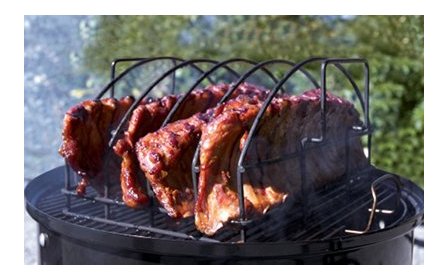
Rib rack: Full racks of baby backs or spare ribs can take up a lot of real estate on your grill grate. Enter the Best of Barbecue Rib Rack—think of it as a condo for ribs. Barbecue up to four racks at a time in the same space it normally takes for one or two. Other benefits? When roasted vertically, the ribs are self-basting, making them tender and succulent. Plus, you melt out excess fat. $18.99
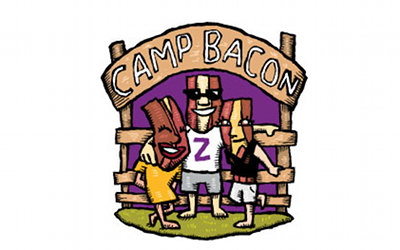
Zingerman’s Camp Bacon Gift Box: Zingerman’s, named one of 25 of the world’s best food markets by Food and Wine, is known to foodies all over Planet Barbecue. Which is why “Camp Bacon,” the festival this Ann Arbor institution started hosting five years ago, was an immediate hit. Delight the bacon-lover on your list with Zingerman’s drool-worthy, bacon-centric gift box. It contains applewood-smoked bacon from Nueske’s (one of my favorite smokehouses), peppered bacon from an Arkansas smokehouse, and Broadbent’s hickory-smoked bacon from Kentucky. Rounding out the package is an apple and bacon coffeecake, a bacon and chocolate pig from haute chocolatier Vosge, and a porcine-themed (what else?) magnet. If you’re feeling generous, add tickets to the next “Camp Bacon”, happening May 29 to June 1, 2014. $125 (not including tickets).
Do you still need more great gift ideas? Find them in the Barbecue Bible store. You’ll find:
Win some of the items on this list by entering our Barbecue! Bible Best BBQ Photo Contest. Like our page on Facebook and post your best barbecue photo on our timeline through Dec. 10th. In the post, make sure to tell us what the photo depicts. And if the picture is of a Steven Raichlen recipe or technique, mention it. The grand prize winner will get a Planet Barbecue gift set with five spice rubs, three spice pastes, Lumatongs, Ultimate Suede Grilling Gloves, and of course, a copy of Planet Barbecue!.
Yours in righteous grilling,
Steven Raichlen
 UP IN SMOKE
The Raichlen Thanksgiving Menu
November 12th, 2013
Dear Up in Smoke Subscriber,
Happy Thanksgiving!
Thanksgiving always brings with it a healthy dose of nostalgia, and this year, I’m feeling the passage of time with particular edge. My friend and mentor, Anne Willan, has just published her memoirs under the title of One Soufflé At A Time: A Memoir of Food and France. The story begins in 1975 with the opening of La Varenne, Anne’s cooking school in Paris. And I was there at the beginning. Yikes!
Anne may not have the name recognition of the latest Food Network diva these days, but if you came of age in the 1970s and 80s and you loved food, there was no other place on earth you wanted to be more than in class at La Varenne. If Julia Child inspired the first generation of Americans to dream about French cuisine, Anne got them on a plane to learn how to do it Paris.
Which brings me in a roundabout way to the 2013 Raichlen Thanksgiving menu.
French turkeys are leaner than their American counterparts—and were even more so back then. One of the coolest techniques I learned at La Varenne was stuffing the bird under the skin with thin slices of pork fat and truffles. It was sort of cool and sort of gross: you wormed one finger between the skin and breast meat at the neck, then a second finger, loosening the skin from the meat. You continued, gently and carefully, until you hand inserted your whole hand, loosening the skin from the breast, thighs, and legs, taking care not to tear the skin. Then you inserted bards du lard, thin slices of French salt pork (fattier than its American counterpart), and jet-black disks of truffle. Truffle, you’ll recall, is an incredibly aromatic—and incredibly expensive—subterranean fungus. Together, they made the meat supernaturally moist and flavorful.
In fact, it’s the memory of that turkey that led me to team up with my pals Amy and Thierry Farges to create a Planet Barbecue Truffle Grilling Butter (no pork fat needed).
Amy and Thierry’s truffle butter is also available at select Whole Foods and Fresh Market stores under the brand name of Aux Delices des Bois.
Grill the turkey using the indirect method, basting well with the pan juices.
Here are the highlights of the Raichlen menu for Thanksgiving, 2013:
Does your family’s Thanksgiving menu have a live-fire twist? We’d love to hear about it—send photos and details to the Barbecue Board.
Yours in righteous grilling,
Steven Raichlen
 UP IN SMOKE
Pie on Fire—Pizza Hits the Grill
October 29th, 2013

Dear Up in Smoke Subscriber,
I’ll never forget the day I discovered grilled pizza. It was back when I was the restaurant critic for Boston magazine. The restaurant in question was Al Forno in Providence, Rhode Island. The waitress delivered an uncut rectangle of dough—cracker-crisp at the edges, blistered and charred on the bottom, moistly chewy in the center. Puddles of fresh tomato sauce dotted the fire-darkened surface, along with shaved cheese and torn fresh basil leaves. Simple, yes, but not simple-minded. The smoky aroma damn near drove me mad.
It was, in short, everything pizza should be—and less—boasting the puffy moistness of freshly baked pita and the smoke flavor of Indian naan. More importantly, it was mercifully free of the gloppy melted cheese or pooled pepperoni grease that mar commonplace pizza joint pies. I summed it up in one short, sweet phrase: love at first bite.
Grilled pizzas have become big business since then, turning up at progressive restaurants and home grills across America and around the world. And with them comes considerable confusion about the best way to grill a pizza.
Do you cook the dough directly on the grill grate over the fire, as they did (and still do) at Al Forno? Or should you use one of the dozens of models of pizza stones now available for use on the grill? Raw crust or pre-cooked? Direct grilling or indirect grilling? And how do you infuse your grilled pizza with the blessed scent of wood smoke?
This week on Barbecue Bible, it’s all about grilled pizza.
There are 8 steps to direct grilling the perfect pizza and 6 steps to “grill-baking” one on a pizza stone. Can you guess them? Refresh your memory.
Want my recipe for the best three-grain pizza dough?
For the ultimate Margherita pizza, make a variation of my pizza recipe from How to Grill. Add extra smoky flavor by grilling the tomato slices instead of frying them and substituting in smoked mozzarella.
And here, in appreciation to you, Up in Smoke readers: five of my favorite toppings for grilled pizza cooked by either technique. Guess which one I’m using this weekend.
- Cooked bacon and thinly sliced cooked potatoes with caramelized onions and sour cream (fresh chopped rosemary is optional)
- Grilled vegetables with fresh herbs (basil, oregano, mint, or marjoram) and coarsely grated ricotta salata or Pecorino Romano, or if you prefer a melting cheese, Taleggio
- Thinly sliced fresh or grilled tomatoes, sliced fresh or smoked mozzarella, olive oil, and basil (an almost classic pizza Margherita)
- Pistachio pesto, thinly sliced mortadella (imagine the best bologna you’ve ever eaten), fresh mozzarella and Pecorino Romano
- Sautéed or grilled wild mushrooms and leeks, roasted garlic, baby arugula and shaved Parmigiano Reggiano
Tell us about YOUR adventures with grilled pizza. Post photos, recipes, and comments.
Yours in righteous grilling,
Steven Raichlen
 UP IN SMOKE
An Apple a Day … Keeps Boring Barbecue Away
October 15, 2013
Dear Up in Smoke Subscriber,
Johnny Appleseed never attended Barbecue University. But if the apple evangelist lived today, we’d welcome him with open arms. John Chapman (his real name) spent 40 years crisscrossing the fledgling United States, collecting and disseminating apple seeds and building nurseries. If the apple is one of our most popular fruits and its byproducts—apple wood, apple cider, cider vinegar, and applesauce—are essential barbecue flavorings, we have this singular American folk hero to thank.
Incorporating apples into barbecue adds a subtle sweetness to meat and the meal and helps you think outside of the box when it comes to flavor. Instead of opting for the usual vegetable or starch as a side, use apples as an alternative. They’re especially tasty and abundant in October, which is National Apple Month.
There are a number of ways you can enjoy whole or sliced apples on the grill or in your smoker:
- Make apple “steaks”: Slice a firm apple crosswise into 1/2-inch thick steaks. Brush with melted butter and crust with cinnamon-sugar or our Best of Barbecue Dessert Rub, then direct grill over a hot fire until darkly browned. Great for dessert and as an accompaniment to grilled or smoked pork.
- Stuff whole cored apples with your favorite pork sausage. Smoke or indirect grill until the apple is soft and the sausage is cooked through (the internal temperature of the latter should be at least 160 degrees.) Use our Best of Barbecue Grilling Rings to hold the apples upright.
- Grate a peeled, cored cooking apple like Granny Smith or Golden Delicious on the largest holes of a box grater into ground turkey or venison for burgers (about 1/2 apple per pound of meat). The apple adds an intriguing fruit flavor, and more importantly, helps keep these lean meats juicy.
- Make “baked” apples Barbecue University-style. Partially remove the core using a vegetable peeler or melon baller (leave the bottom intact). Make a simple stuffing with butter, brown sugar, gingersnap cookie crumbs, and cinnamon. Stuff the apple and top each with a half marshmallow. Indirect grill over a moderate heat with apple chips tossed on the coals to generate wood smoke.
Check out my Cider-Grilled Pork Porterhouse, which features apple cider in the marinade and apple syrup in the sauce.
Looking for an interesting, flavor-packed slaw for a pulled pork sandwich? Make the vinegar slaw in BBQ USA, adding 1 apple, cored, and cut into matchstick slivers.
Do you have your own apple recipe you’re fired up about? Share the details and photos on the Barbecue Board!
Yours in righteous grilling,
Steven Raichlen
 UP IN SMOKE
Brew Meets ‘Que!
October 2nd, 2013
Dear Up in Smoke Subscriber,
It’s Oktoberfest! Not that this barbecue community needs an event to honor the inviolable bond between beer and barbecue. Germans celebrate the connection with Oktoberfest—two raucous weeks of beer drinking and partying in Munich, which paradoxically (and for reasons I’ve never quite understood) starts in September (this year, September 21 to October 6, and for planning purposes, September 20 to October 5 in 2014).
If you’re lucky enough (or foolhardy enough) to attend Oktoberfest, you’ll experience some distinctly German versions of barbecue, which haven’t quite yet made it to the U.S. For example, ochsenbraterai — a whole steer roasted on a spit over an open wood fire. Orsteckerlfisch—a whole fish (such as bream, trout, or mackerel) stuffed with garlic and herbs, basted with oil, skewered on a steckerl (stick or branch in the Bavarian dialect), and grilled camp-style over a wood fire.
I’ll never forget my first Oktoberfest in Munich (although there’s a lot I can’t remember). The year was 1976; I had come to Germany to study medieval cooking in Europe as part of a Watson Foundation Fellowship I won upon graduating from college. I remember finger-thick bratwurst grilled over pinecones at a street fair on the way to Munich. (So much for the cardinal rule of grilling only over hardwoods.) I remember schweinshaxen, Munich’s famous juniper- and mugwort-marinated fresh ham hocks roasted on a charcoal-burning rotisserie at the landmark restaurant Haxenbauer. (Read all about it in Planet Barbecue!)
I remember drinking Bavarian beer by the mass, one-liter gray earthenware stein, served by muscular waitresses decked out in dirndls. (I also remember the bizarre feeling being a Jew surrounded by hundreds of thousands of Germans in the city where Hitler rose to power.) I drank another mass, then another, and the next thing I remember was waking up the next day in a strange hotel without the faintest idea how I got there.
All of which is a lengthy prologue to the theme of this newsletter—beer and barbecue—and how they work together. I’m not just talking about drinking beer at a barbecue — the beverage of choice at grill sessions from Biloxi to Buenos Aires to Bali. No, I’m talking about how people around Planet Barbecue use beer in their smoking and grilling.

CLICK HERE to read about 7 flame-tested barbecue techniques featuring your favorite brew.
To celebrate Oktoberfest:
And here are three luscious beer-based recipes to whet your palate:
How do YOU grill or barbecue with beer? Share your photos and recipes on the BBQ Board.
Raising a cold one to your health!
Yours in righteous grilling,
Steven Raichlen
 UP IN SMOKE
Gold Plate Tailgating Video & Tips!
Plus, Get a FREE Raichlen’s Tailgating! E-Book
September 17th, 2013

Dear Up in Smoke Subscriber,
Football fanatics across the country are in their “happy place” now that college ball is underway and the NFL season has officially started. And you know what that means: Stadium parking lots shrouded in low-hanging clouds, probably visible by satellite, of intoxicatingly fragrant smoke generated by the fiercest competitors on the planet—tailgaters. More than 20 million of them, according to the American Tailgaters Association. Time to gird thy loins for battle! Because the real contest is on the asphalt, not the Astroturf…
Tailgating, a distinctly American tradition, has come a long way since November 6, 1869, when fans lowered the buckboards of their horse-drawn wagons to serve picnic lunches from hampers at the first intercollegiate football game, Princeton vs. Rutgers, in New Brunswick, New Jersey. For those keeping score, Rutgers won, 6 – 4.
But you don’t have to be a legacy title-holder to Parking Space A-10 to enjoy the competitive bonhomie that tailgating fosters. The scarcity of parking spots has created a new subculture of tailgaters—people who unapologetically entertain like-minded sports enthusiasts at home, where the best seats, high-def screens, and access to instant replays are.
Regardless of where you host your tailgating party, the food must impress. Gone are the days when burgers and dogs made the cut. To bring your “A” game to this contest, practice what I like to call GPT, “Gold Plate Tailgating.” No, this doesn’t necessarily mean bringing your best table linens or a margarita machine powered by a car battery to the stadium. You can if you want to: Hey, candelabras look cool at night games.
Here’s a glimpse of my playbook:

- Build your GPT menu around a large hunk of meat that serves lots of people, such as prime rib or The Ultimate Cheesesteak, a whole butterflied beef tenderloin stuffed with poblanos, onions, and provolone cheese, then grilled and served with chipotle sauce.
- Bring two grills if possible, one for direct grilling appetizers like pepper Jack or Cheddar cheese quesadillas, and another for foods needing lower, slower cooking times, like barbecued onions or pork shoulder. While I personally prefer charcoal or wood-burning grills, there are a number of good portable gas grills.
Click here for 5 more tailgating tips to help you warm up for the game on a full stomach!
Yours in righteous grilling,
Steven Raichlen
 UP IN SMOKE
Back to School with Barbecue University™
September 4th, 2013

Dear Up in Smoke Subscriber,
Laptop? iPad? Smartphone? September is back to school month, of course, but the checklist of essential school supplies has changed a lot since the name “Raichlen, Steven” appeared on a class roster. Believe it or not, there was a time when the word “tablet” referred to a pad of lined paper.
If this time of year makes you nostalgic for school, enroll in the learning adventure of a lifetime—Barbecue University™ at The Broadmoor—for one of our May/June, 2014 sessions.
You may remember the old song about school days:
Reading and writing and ’rithmetic
Taught to the tune of a hick’ry stick…
Well, Barbecue University™ is all about hickory sticks. And apple wood and cedar planks, too.

Accept the challenge, and we promise your school supply list will be short: Bring your curiosity, your enthusiasm for live-fire cooking, and a hearty appetite.
BBQ U will provide everything else—the tools, fuels, and more than 30 grills and smokers to help you take your barbecuing and grilling skills to graduate level. And talk about classrooms! Our students start class in an indoor amphitheater with state of the art video and do their “lab work” in a vast outdoor burn area with dramatic views of Colorado Springs.

Photo courtesy of Rob Baas, class of BBQ U 2013.In case you’ve been playing hooky for the last decade,
Barbecue University™ is the 3-day workshop I teach annually at the luxurious Broadmoor resort in Colorado Springs. (Think of it as parochial school for people who’ve found barbecue religion.) Our students come literally from all over the world
, with a large percentage of repeat students reluctant to cut ties to their alma mater. Each year the menu is different and these were some of the recipes the
BBQ U class of 2013 made this past summer:

There is no homework, no summer reading list (beyond my book
Planet Barbecue! and my
Barbecue! Bible cookbook series), but as at the Harvard Business School, class participation is essential. And yes, we
do give a final exam on the last day of class, but in my 15 years of teaching
BBQ U, no one has failed it.
| The course is very hands-on (everyone cooks) and no matter how much you think you know about grilling and smoking, you will learn something. You will come home with many recipes you are dying to make, and you will likely be the most popular backyard cook in your neck of the woods – for years to come.
Larry Olmsted, Forbes.com
Barbecue University™ alumnus
|
The theme of our 2014 curriculum is Adventures on Planet Barbecue™, focusing on the most eye-popping recipes and jaw-dropping techniques from around the world’s barbecue trail. You’ll master the ABCs of global grilling. A for Australian shrimp on the barbie. B for Balinese roast suckling pig. C for Caribbean cabrito. And so on.
We’ll also give you a refresher course on the icons of American barbecue, from Memphis dry ribs to Texas brisket to Carolina pork shoulder.

As for the “new math” at
BBQ U, you’ll learn:
- The 5 Methods of Live-Fire Cooking
- The 4 Ways to Determine When Food is Done
- 3 Techniques for Grilling Fish Without it Sticking to the Grill Grate
- 2 Ways to Make a Rub
- The 1 and Only Recipe You’ll Need for Spit-Roasting a Whole Prime Rib
Barbecue University™ at the Broadmoor, a Forbes 5-Star and AAA 5-Diamond resort, is not only an education-enhancing activity for individuals: It’s also a great program for husbands and wives, fathers and sons, mothers and daughters, friends, co-workers, etc. It also makes an unforgettable gift for a special occasion. Classes fill quickly, so register without delay.
 Barbecue University™
. Where the only marks you get are grill marks. The details:
- Packages start at $2,100 for three nights based on double-occupancy.
- For more information, go to the Barbecue University™ page on BarbecueBible.com where you can also check out a student’s perspective of BBQ U 2013, as well as get details on how to make a reservation.
- You can also reserve directly with The Broadmoor by calling 855-634-7711 or going to The Broadmoor’s website.
PLUS! DON’T MISS THIS:
Yours in righteous grilling,
Steven Raichlen